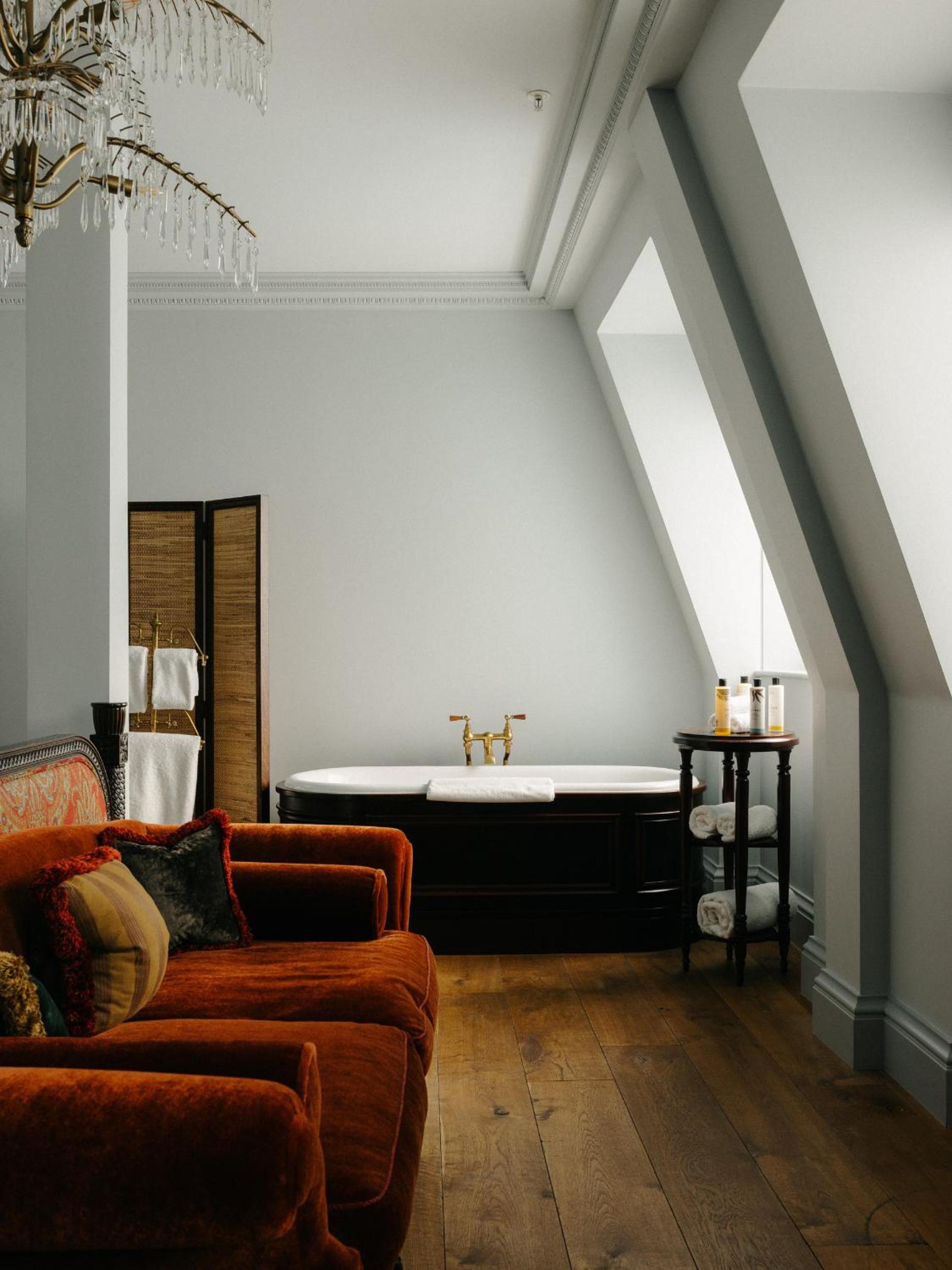
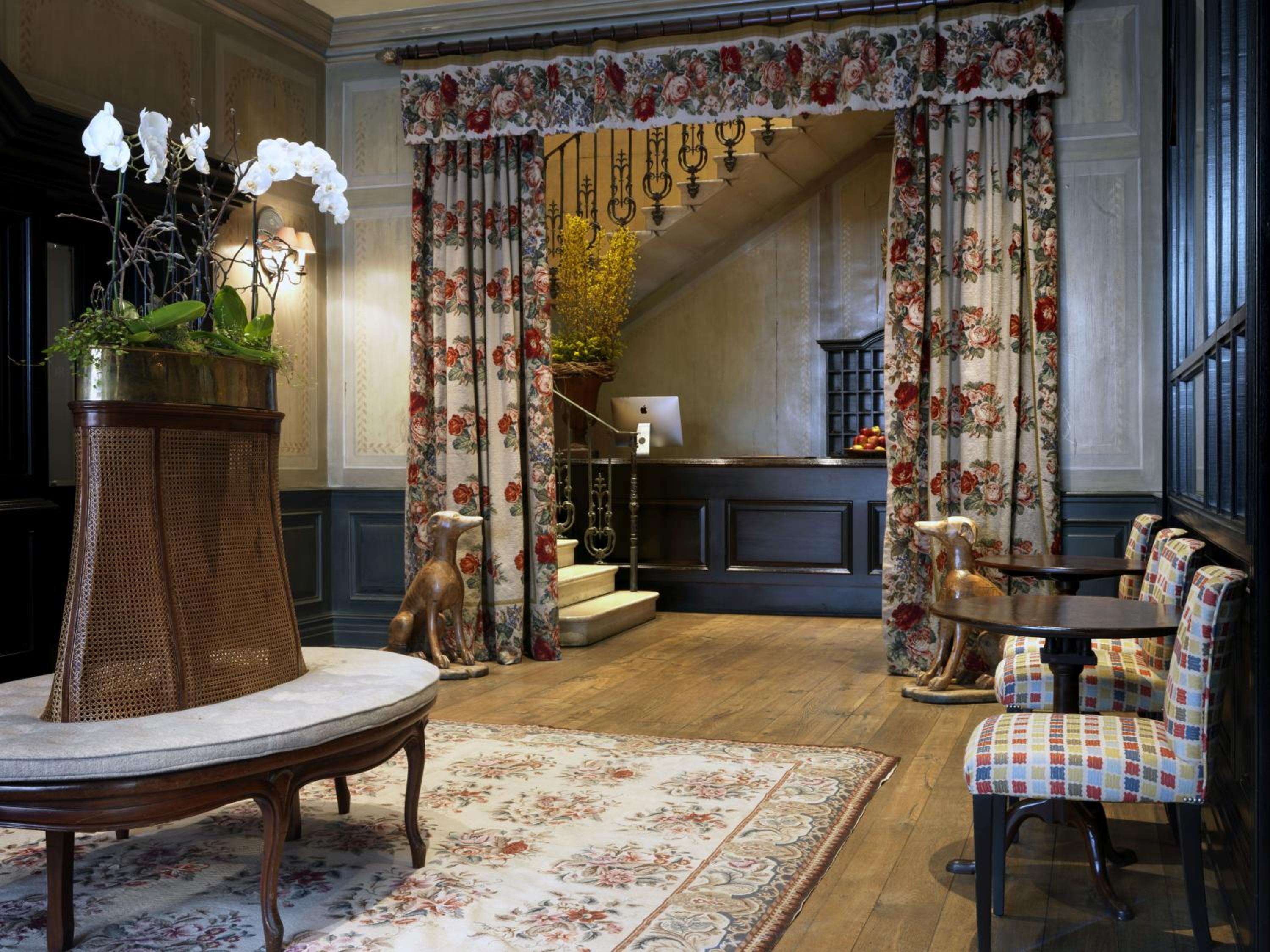
Folgate Street is not the London most visitors come looking for. It is quieter, older, layered with centuries of trade and migration and reinvention. And it is here, behind a modest Georgian façade in Spitalfields, that Batty Langley's reveals itself as something closer to a time capsule than a hotel. Named for the eighteenth-century architect and garden designer Batty Langley, the property occupies a row of original Georgian townhouses, their interiors restored with a devotion to period detail that borders on the obsessive. Hand-blocked wallpapers, four-poster beds draped in heavy fabrics, writing desks set beneath sash windows, fireplaces framed in carved wood. Every room is furnished with antiques rather than reproductions, and the effect is not theatrical but deeply particular, as though you have been invited to stay in the private home of a collector with exquisite and slightly eccentric taste.
The twenty-nine rooms and suites at Batty Langley's each carry their own character, shaped by the proportions and quirks of the original architecture. Some are intimate and low-ceilinged, tucked under the eaves. Others are grander, with tall windows overlooking the street or the interior courtyard. Candles and low lamplight replace the glare of modern fixtures in many spaces, lending evenings a warmth that feels genuinely preindustrial. The hotel's drawing rooms and parlours serve as communal gathering spaces, furnished with deep armchairs, stacked bookshelves, and the kind of inviting disorder that makes you want to settle in with a glass of something and stay. Breakfast is served in a dining room that continues the domestic mood, set with mismatched porcelain and silver.
Spitalfields itself is a neighborhood of contrasts. The great canopy of Old Spitalfields Market sits just steps away, its stalls filled with independent designers, vintage dealers, and food vendors. Brick Lane runs nearby, bringing its own restless energy. Christ Church, Hawksmoor's brooding masterpiece, anchors the neighborhood's western edge. And yet Folgate Street itself remains remarkably quiet, a residential pocket where the eighteenth century has never entirely retreated. The proximity to Liverpool Street station places the rest of London within easy reach, but the real pleasure of staying at Batty Langley's is how little you feel compelled to leave the immediate surroundings.
What lingers is the texture of the place. Not luxury in any contemporary sense, but something rarer: a sustained atmosphere of intimacy and historical fidelity that makes the present feel like a gentle intrusion. Batty Langley's does not perform the past. It simply never left.