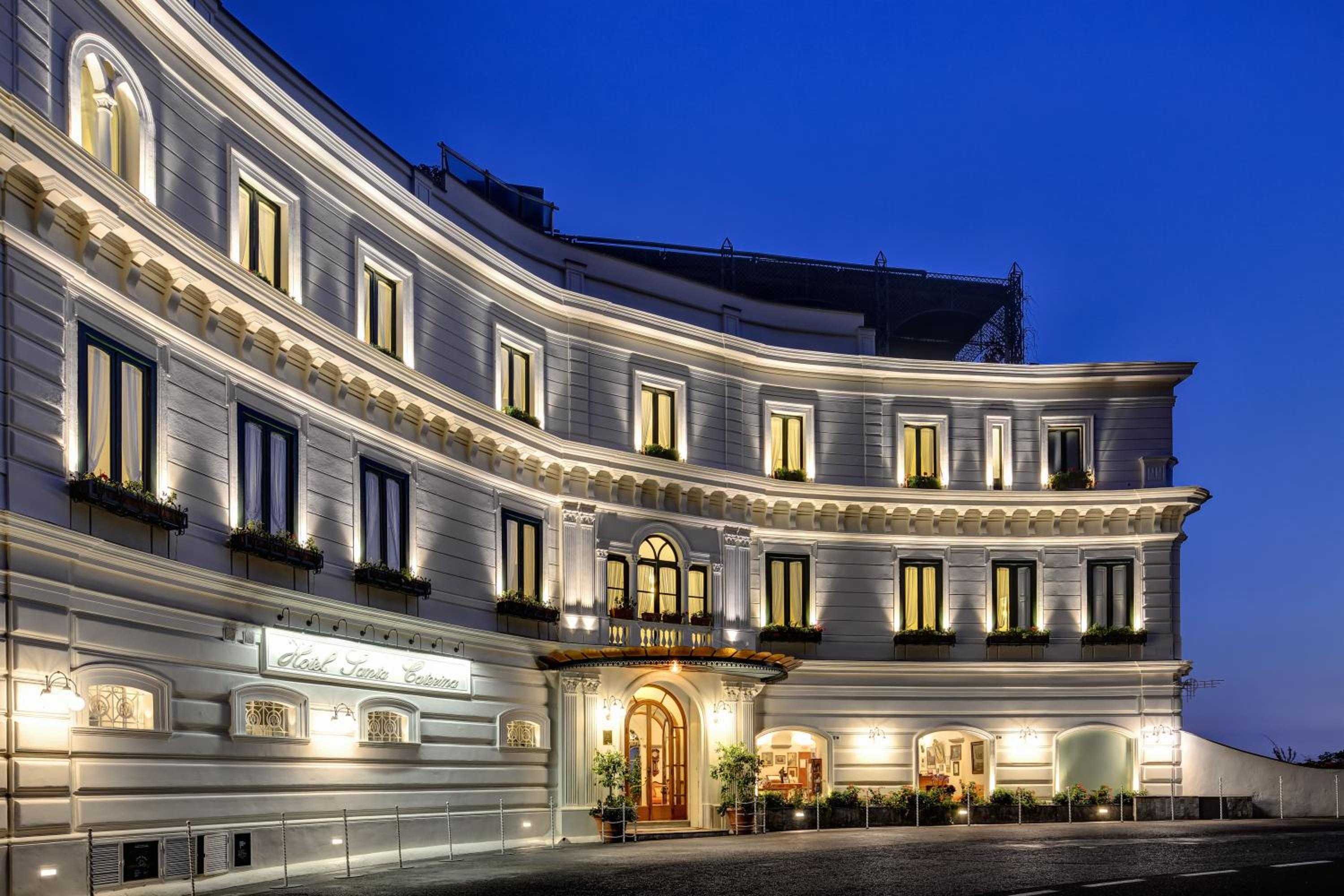
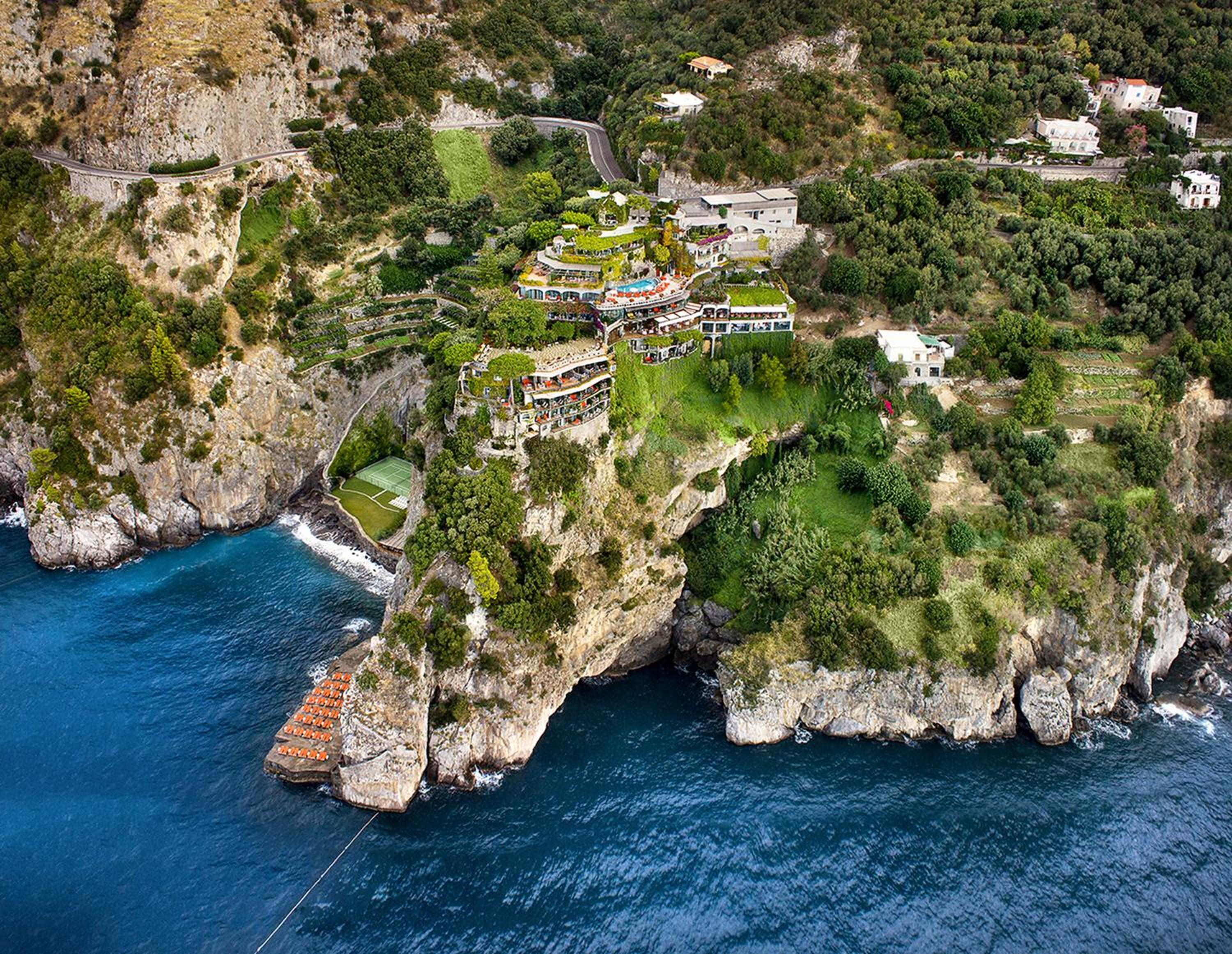
The road narrows as it traces the coastline between Amalfi and Positano, and then the property reveals itself: a seventeenth-century Dominican monastery perched on a cliff nearly a thousand feet above the Tyrrhenian Sea. Monastero Santa Rosa Hotel & Spa occupies a structure that served as a convent for centuries before falling into ruin and undergoing a painstaking, decade-long restoration. What remains is a property where vaulted ceilings, original frescoes, and stone archways coexist with contemporary comfort, and where the architecture itself still carries the weight of contemplation. The scale is intimate, with just twenty rooms and suites, each uniquely shaped by the building's monastic bones. Many feature original tile floors, barrel-vaulted ceilings, and private terraces that open to panoramic views of the coastline and the sea far below.
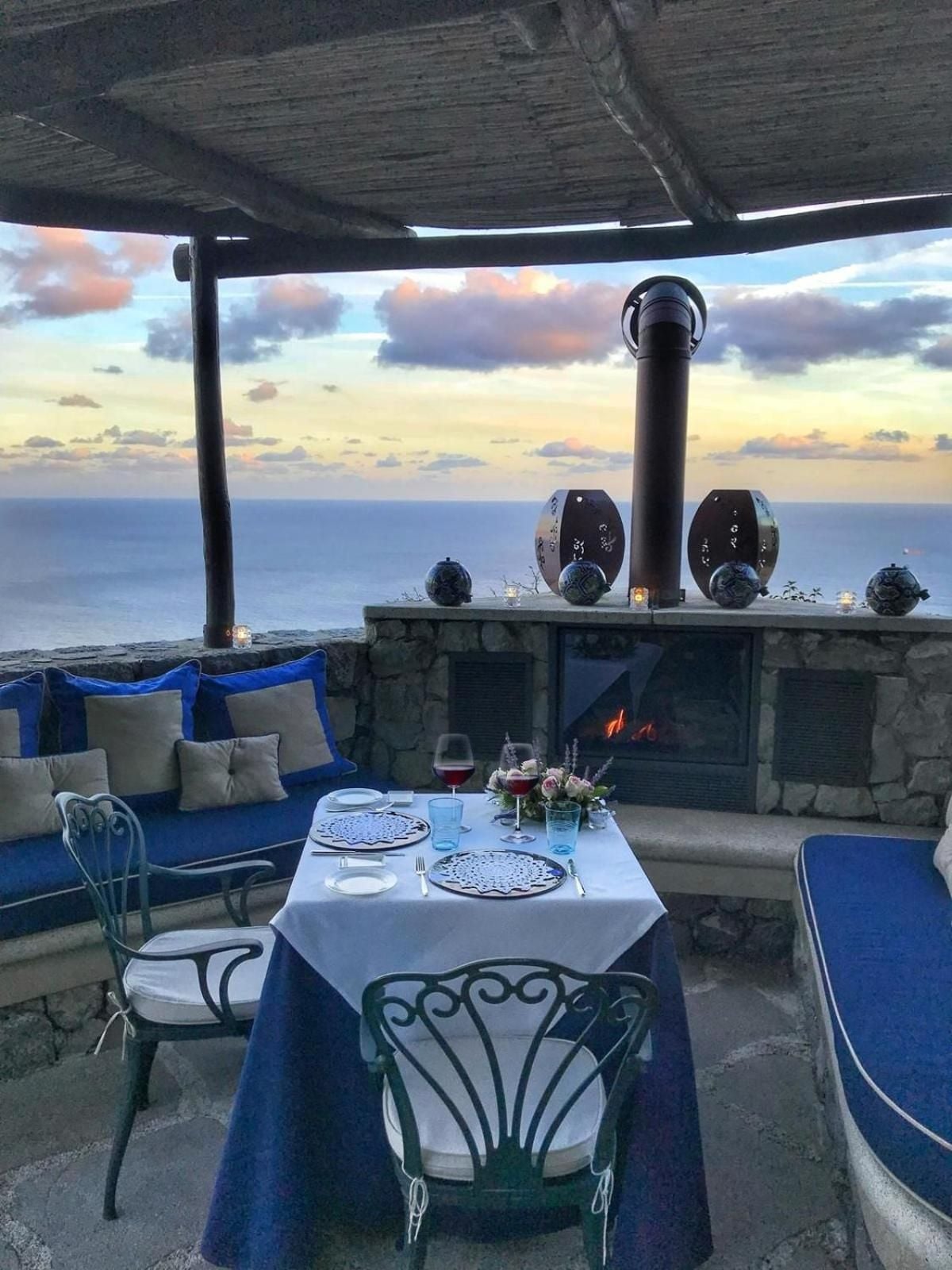
The property's most striking feature may be its infinity pool, carved into a terrace that cantilevers over the cliff edge with nothing between the water and the horizon but open sky. Below the pool, tiered gardens cascade down the mountainside in terraces planted with citrus, herbs, and Mediterranean botanicals, many of which supply the hotel's kitchen. Dining takes place at Il Refettorio, housed in the former refectory where nuns once gathered, its vaulted stone interior softened by candlelight and seasonal menus rooted in the produce of the Campanian coast. The cuisine draws on the region's deep traditions, with local seafood and ingredients from the property's own gardens shaping each course.
Beneath the monastery, carved into the rock itself, the spa occupies spaces that once served as storage cellars and chapels. Treatments draw on local botanicals and thermal traditions, and the subterranean setting lends a quality of stillness that feels earned rather than designed. Throughout the property, original staircases, hidden courtyards, and covered loggias create a rhythm of discovery. Guests move between sun-drenched terraces and cool stone interiors, between the brightness of the coast and the quiet enclosure of centuries-old walls.
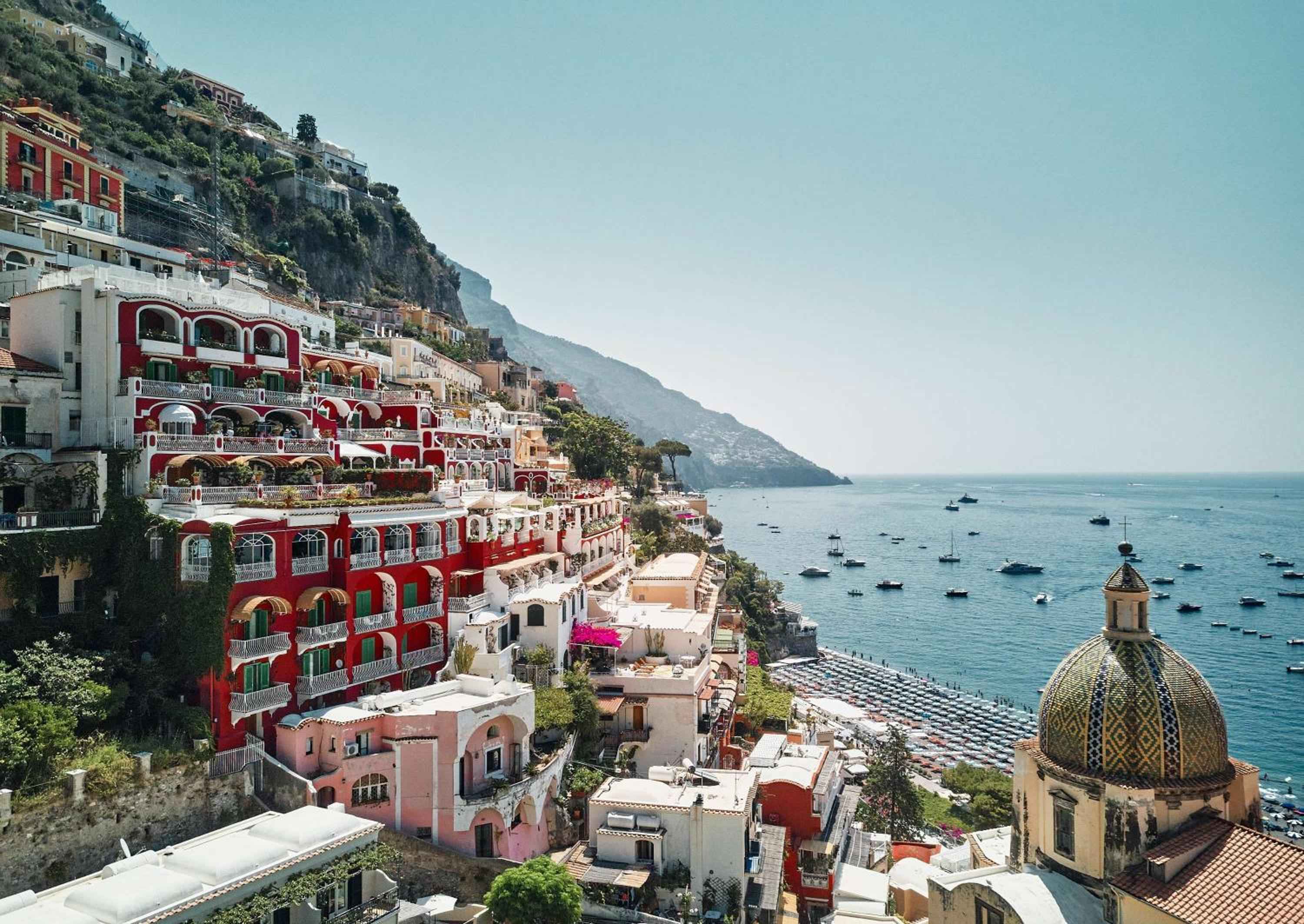
The Amalfi Coast unfolds in both directions from the monastery's clifftop position. The villages of Conca dei Marini, Amalfi, and Positano are nearby, each accessible by the winding coastal road or by boat from the water. The region's particular beauty lies in its verticality, the way towns cling to rock faces and pathways trace ancient routes through terraced hillsides above the sea. Monastero Santa Rosa sits within this landscape not as an addition but as something that has belonged to it for four hundred years. The feeling that lingers is one of earned stillness, a place where the pace slows not because the hotel asks it of you, but because the building itself has been practicing silence for centuries.